
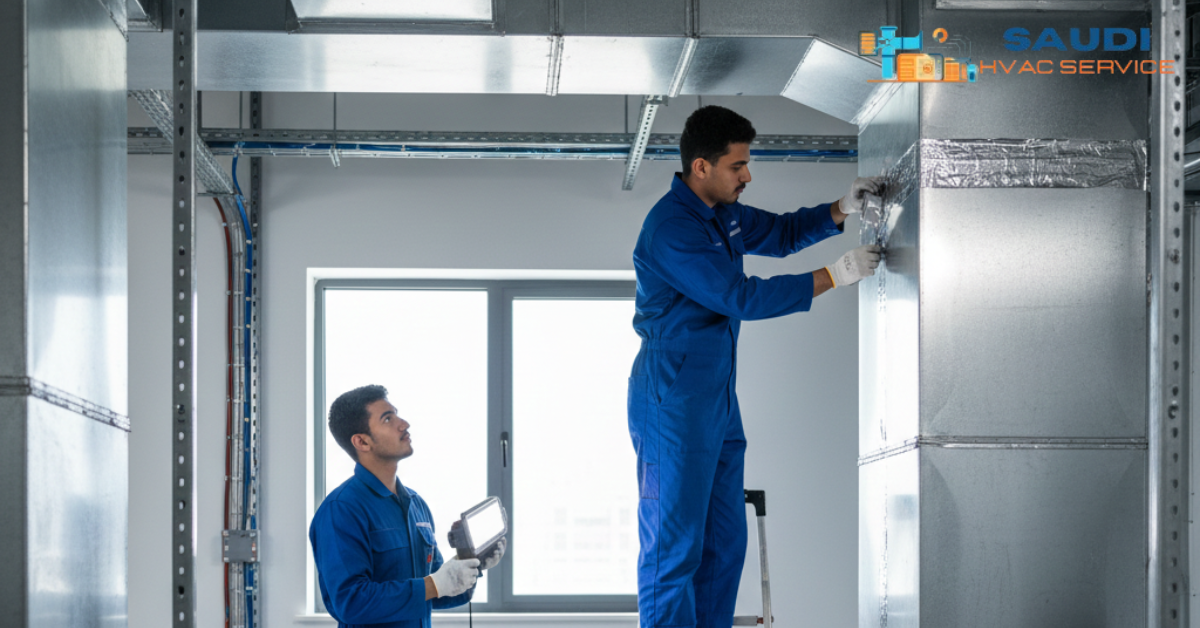
Cooling is a necessity in Saudi Arabia. With long summers and strong heat, homes and businesses depend on AC systems to stay comfortable. But even the best AC unit cannot perform well if the ductwork has leaks. This is why HVAC duct sealing is one of the most important parts of a complete cooling system. When ducts are sealed the right way, they deliver steady airflow, better cooling and lower electricity costs.
This guide explains how duct leaks happen, why they matter and how proper sealing improves system performance across Saudi Arabia. Whether you are a homeowner, a contractor or a facility manager, you will find this guide practical and clear.
What HVAC Duct Sealing Really Means
The duct system carries cool air from the AC unit to every room in a building. Over time, gaps, cracks and loose joints appear. These leaks waste energy and reduce comfort. HVAC duct sealing is the process of closing these leaks so the air that your system produces actually reaches your rooms.
In Saudi Arabia, where cooling is needed for most of the year, a well-sealed duct system can make a big difference. Many buildings lose 20 to 30 percent of cooled air through leaks. This means your AC works harder and uses more electricity. Sealing stops this waste and keeps your home cooler with less load on the system.
Common Duct Problems in Saudi Buildings
If you live in Riyadh, Jeddah, Dammam or any city in the Kingdom, you may notice some cooling problems that are actually caused by leaky ducts.
These include:
• One room colder than another
• Weak airflow from vents
• AC running longer than usual
• High electricity bills
• Dust collecting around vents
• Hot spots in rooms during the day
Most of these issues come from loose connections, damaged insulation or gaps left during installation. This is why HVAC duct sealing plays a big role in fixing such problems.
Why HVAC Duct Sealing Matters in Saudi Arabia
The climate in Saudi Arabia puts heavy pressure on HVAC systems. Hot weather, long operating hours and dusty air all affect the performance of the duct system. Here are the main reasons why HVAC duct sealing is important in this region:
1. Better Cooling Performance
Air leaks drop the strength of airflow. This makes rooms feel warm even when the AC is running. Proper sealing helps your system deliver cool air evenly.
2. Lower Electricity Bills
Cooling already takes a large part of monthly expenses. When leaks are sealed, the AC does not overwork. This reduces power consumption and brings real savings.
3. Cleaner Indoor Air
Dust from outside or from ceilings enters through leaks. When ducts are sealed, indoor air becomes cleaner and safer for families and employees.
4. Longer System Life
A well-sealed duct system reduces strain on the AC compressor and fan motor. This helps the system last longer and reduces repair needs.
5. More Comfort in Every Room
Rooms that used to stay warm will cool faster and stay comfortable when there are no leaks in the duct line.
Also read: What Are Air Ducts? The Expert Guide to HVAC Ductwork
Types of Materials Used for HVAC Duct Sealing
There are three main sealing materials used in Saudi Arabia:
1. Mastic Sealant
A thick, long-lasting material applied with a brush. It is very effective for metal duct joints.
2. Foil Tape
High-quality tape made for HVAC work. It can handle heat and stays strong for years.
3. Aeroseal (Advanced Method)
A modern technique that seals leaks from inside the duct using pressure technology. It is used mainly in large buildings.
Professionals choose the material based on the duct type and the leak level.
How HVAC Duct Sealing Works
Sealing can be done in different ways depending on the type of duct system, the condition of the joints and the level of leakage. In Saudi Arabia, most homes and commercial buildings use flexible ducts or rigid metal ducts. Both types need sealing for full performance.
1. Visual Inspection
A technician checks all joints, elbows, connectors and transitions. Leaks are usually found where two ducts meet.
2. Pressure Testing
Some companies use tools to measure how much air is escaping. This gives a clear picture of the duct condition.
3. Cleaning Before Sealing
Dust and loose residue are removed so sealing materials stick well.
4. Applying Sealant or Tape
Special materials are used. Regular tape is not enough. Professional HVAC tape or mastic sealant is applied to all leak points. This step is the heart of HVAC duct sealing work.
5. Insulation Fixing
After sealing, the insulation is repaired or replaced to maintain cooling efficiency.
6. Final Testing
Airflow measurements help confirm that the sealing improved the performance.
Why DIY Duct Sealing Often Fails
Many homeowners try to fix duct leaks themselves. But without the right tools and materials, the sealing does not last. Normal tape loosens under heat. Poor sealing causes bigger leaks in the future. This is why trusted companies do a better job. They know how ducts behave in Saudi climate and how to seal them correctly.
Hiring a professional for HVAC duct sealing ensures better cooling and long-term results.
Signs Your Ducts Need Sealing
Here are the most common signs found in Saudi homes and businesses:
• Rooms cool unevenly
• AC runs for long periods
• Electricity bills rise suddenly
• Dust builds up quickly
• AC struggles during peak heat
• Noisy ducts during operation
If you see these issues, it is time to check your duct system.
Benefits of Professional HVAC Duct Sealing
Here are the main benefits you will notice after sealing your ducts:
1. Stronger Airflow
Air reaches every room with better force.
2. Faster Cooling
Your rooms cool down quicker because the system is more efficient.
3. Stable Temperature
No more hot and cold spots.
4. Lower Energy Use
Less air lost means less power consumed.
5. Less Dust
Sealed ducts do not pull in dirt from ceilings.
6. Quieter AC Operation
The airflow path becomes smoother and cleaner.
7. Longer Equipment Life
Reduced pressure on your AC improves its lifespan.
All these improvements make HVAC duct sealing one of the most valuable services for Saudi buildings.
How Much Does HVAC Duct Sealing Cost in Saudi Arabia?
Prices vary based on:
• Size of the building
• Length of duct lines
• Level of leakage
• Condition of insulation
• Access to ceiling or walls
On average, sealing a full home duct system starts from around SAR 800 to SAR 2500 depending on complexity. Large villas and commercial spaces may cost more.
Why Saudi HVAC Service Is Trusted for Duct Sealing
Our team understands how ducts behave in Saudi conditions. Extreme heat, dust and long cooling hours require clean design and strong sealing. We deliver neat work that improves your AC’s performance and reduces energy waste.
Our sealing service includes:
• Full duct inspection
• Leak testing
• Professional sealing with proper materials
• Insulation repair
• Airflow balancing
• Post-testing for performance
We focus on long-term results, clean finishing and real improvement in comfort.
Conclusion
In Saudi Arabia, where cooling is essential, ducts must be sealed to deliver full performance. A well-done HVAC duct sealing service reduces energy waste, improves airflow and increases comfort in every room. It also protects your AC from unnecessary strain and helps it last longer. If you want a cooler home, lower bills and better airflow, duct sealing is one of the smartest upgrades you can make.
Location: Industrial City, Al Sina’iyah, Riyadh, Saudi Arabia